Toyzie AI: Toy Value Scanner
- 4.1
- Rating
- 100.00K
- Installs
- Free
- Price

 Analysis by App-foxy
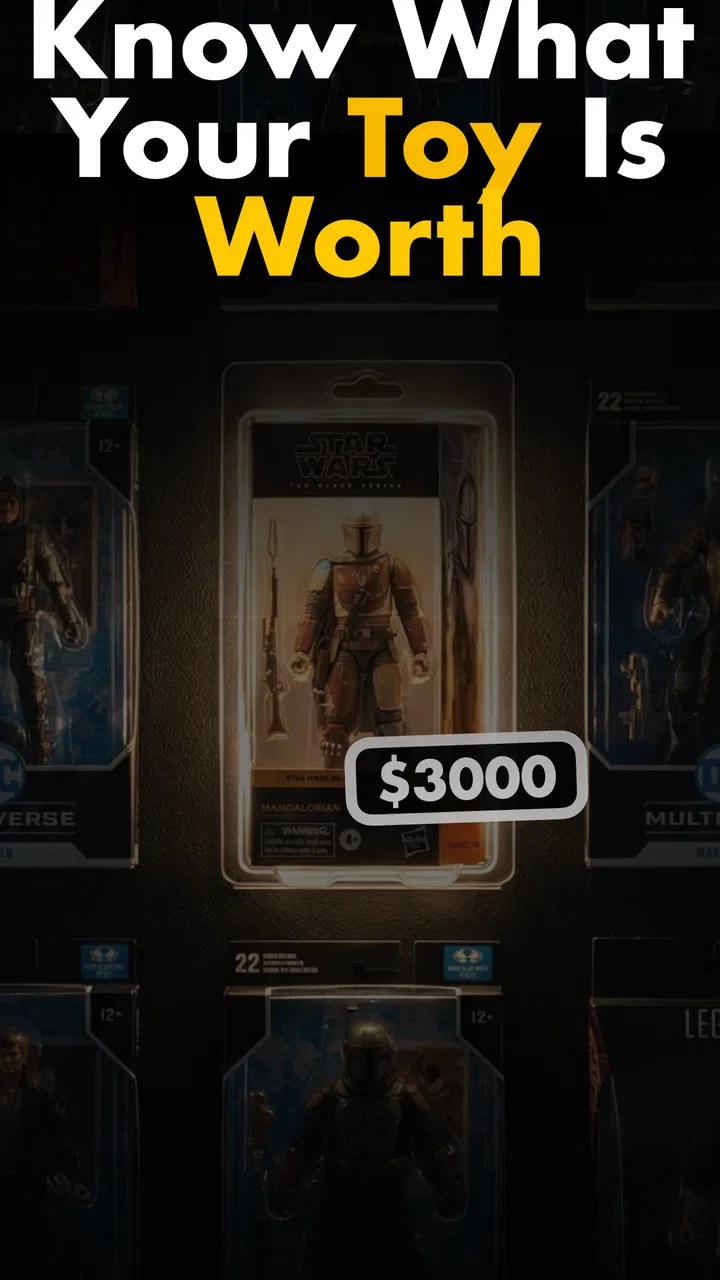
I started using Toyzie AI as a quick way to make sense of the toy collection that tends to spread across a household. A box of mixed figures, an old action toy found in a cupboard, or a second-hand item with no packaging can be surprisingly difficult to identify by memory alone. The app is built around scanning, identifying, and valuing collectible toys with artificial intelligence, so its appeal is immediate: point the phone at an item and get a useful starting point instead of searching through endless image results.
That makes it more interesting than a simple toy database. I see it as a practical tool for families, collectors, and anyone sorting belongings before selling, donating, insuring, or reorganizing them. At the same time, I would not treat an automated estimate as a final market verdict. Its best role is helping me decide what deserves closer research.
How Toyzie AI fits into a shared household
The most convincing everyday use is a shared sorting session. Imagine clearing a child’s room after a birthday, moving older toys into storage, and finding a handful of loose pieces that nobody can name. Instead of stopping to ask several people or opening multiple browser tabs, I can scan each promising item and create a rough sense of what it might be. That changes the task from “What is this?” into “Which of these items should we investigate further?”
You May Also Like

 Blood Strike: 2.5 Anniversary
Blood Strike’s Loadouts Turn Every Drop Into a Tactical Gamble
A close look at Blood Strike’s custom loadouts: how fast access to signature weapons reshapes its battle royale rhythm, rewards preparation, and narrows the gap between fights.

 Pandora - Music & Podcasts
Pandora’s Music Is Easy to Start, but Harder to Recover
Pandora’s strength is its low-effort path from a seed to a station. Its weak spot is how much confidence it asks you to place in connection, setup, and quiet recovery.

 8 Ball Pool
 Is Built on Rivalries, Rematches, and Routine
A close look at the rivalries, rematches, shared routines, and unanswered safety questions that turn a quick pool match into a persistent mobile community.

 Samsung Music
’s Quiet Strength Is Playing What You Already Own
Its reach comes less from spectacle than from dependable access to a personal library. That simplicity is both the app’s strongest retention engine and its ceiling.

 AccuWeather: Weather Radar
AccuWeather Review: A Quick, Clear Forecast for Everyday Decisions
For everyday plans, the best forecast is the one you can understand quickly. AccuWeather makes rain timing, radar, and local conditions easy to act on, with a few trade-offs.

 Hill Climb Racing
Why Hill Climb Racing Still Turns Crashes Into One More Run
A tiny car, a bumpy hill and one more upgrade: Hill Climb Racing keeps resurfacing because its simple chaos makes every near-miss feel personal.
More From Our News Desk



That distinction matters because toy collections are rarely organized like professional inventories. A family may have a recognizable figure beside an unbranded accessory, a vehicle missing a small part, and a boxed item whose packaging has faded. The app is most useful when it helps separate likely collectibles from ordinary toys. I would scan the clearest, most complete objects first, then use the results to decide whether the less obvious pieces deserve individual attention.
For a parent and child working together, the process can also turn tidying into a small identification project. The adult can handle the phone and keep track of the results while the child supplies context: where the toy came from, whether it belongs to a set, and whether any accessories are nearby. That human information is important. A camera can recognize visual patterns, but it cannot automatically know that a loose character came from a particular boxed collection or that a missing accessory is sitting in another room.
In my experience, the strongest workflow is not scanning everything indiscriminately. I would place the item on a plain surface, remove distracting objects from the frame, and photograph the front or most recognizable side. If the result looks uncertain, I would try again with better lighting and include distinctive details such as a logo, unusual helmet, vehicle shape, or printed emblem. A clean scan gives the identification process a fairer chance than a crowded floor full of similar toys.
What the scan is good for, and where judgment still matters
The app can save time at the discovery stage, especially when I do not know the correct words to type into a search engine. A web search usually depends on describing the object accurately. That is difficult when all I can say is “blue robot with a silver chest.” A visual tool gives me a route into the search process without requiring collector vocabulary first.
Valuation is more complicated. A toy’s possible worth can depend on condition, completeness, packaging, edition, region, demand, and whether the item is genuine. Two objects that look almost identical may have very different resale prospects. I therefore use any value shown by the app as a prompt for verification, not as a promise of what I will receive.
The practical rule is simple: use the scan to prioritize research, not to replace it. If an item appears interesting, I would inspect markings, compare completed sales on a suitable marketplace, check whether parts are missing, and record its condition honestly. This is especially important before setting a price or making a decision based on the estimated value.
Keeping household boundaries clear
A shared phone creates a small but real organizational problem. If several people scan toys on the same device, the results can become mixed together. One person may be checking items for donation while another is investigating a collection they plan to keep. Toyzie AI is easiest to use when the household agrees on a simple routine before scanning begins.
I would divide the work into physical groups first: keep, sell, donate, research, and undecided. Even if the app does not provide a special family inventory system, those labels can be maintained with separate piles, notes, or photographs outside the scanning session. The important point is to avoid assuming that every scan belongs to the same person or the same collection.
This matters for privacy as well as convenience. A child may want to identify a favorite toy, while an adult may be checking inherited belongings or preparing a resale list. On a shared device, I would avoid leaving personal notes, purchase details, or valuation decisions where another user could misunderstand them. The app can support identification, but household ownership and record-keeping still need a human system around it.
For a family project, I would also nominate one person to make final decisions about duplicates and sales. Several people scanning the same object can produce repeated work and conflicting expectations. One scanner, one temporary location for each item, and one agreed method for recording results is much more efficient than passing the phone around without a plan.
Setup, age context, and trust when using it together
Toyzie AI is a free tools app from NineG, with optional in-app purchases listed from $4.99 to $39.99 per item. That makes the first step straightforward for someone who wants to test the basic experience, but I would still pay attention before confirming any purchase. In a household, especially when a child is holding the device, the adult should be the person who decides whether an optional paid feature is worthwhile.
The app is marked for Everyone, which fits its subject matter and makes it approachable for a family sorting toys together. An age label is not the same thing as a promise that every child should use the app without supervision. The camera, household device, purchase flow, and interpretation of value are all reasons for an adult to stay involved with younger users.
I would begin with a small batch rather than a whole room. Choose several toys with clear shapes and recognizable details, scan them one at a time, and see whether the results are useful enough to justify a larger sorting session. This approach avoids building a complete household workflow around an app before understanding how well it handles that particular collection.
The current version is 1.0.20, and it runs on Android starting with version 7.0. Those requirements make it accessible on many older Android phones, which is helpful when the family’s shared device is not a recent flagship. Still, the quality of a camera scan depends on the phone, lighting, and the condition of the toy, so an older compatible device may not produce the same practical experience as a newer one.
When I prepare an item for scanning, I clean away dust only if doing so is safe and avoid rearranging fragile parts just to make the picture look better. I photograph valuable-looking toys without opening sealed packaging or forcing movable joints. That is a small but important trade-off: a clearer image may help identification, but preserving the object’s original condition is more important if collectibility is part of the reason for scanning it.
Trusting results without overtrusting them
Artificial intelligence is useful here because it can narrow down possibilities quickly, but confidence should come from several clues rather than a single result. I look for agreement between the visual match, the toy’s markings, its accessories, and the story of where it came from. If those pieces do not line up, I treat the result as provisional.
A common mistake would be scanning a damaged or incomplete toy and assuming the displayed value applies to a complete example. Before sharing a result with another family member, I would add the condition in plain language: loose, boxed, worn, missing parts, or untested. That prevents a rough identification from turning into an inflated expectation about selling it.
Another useful habit is to photograph the underside, back, or manufacturer marking separately when the first view is generic. Many toys share colors and silhouettes, while small stamped details can distinguish one line from another. The app may not need every angle for its first attempt, but those additional images are valuable when I later verify the identity elsewhere.
I would also avoid using a scan as proof of authenticity. A visual match can suggest what an item resembles; it does not by itself establish that the item is original. If a purchase, sale, inheritance, or insurance decision depends on authenticity, I would seek a specialist opinion or stronger documentation.
Coordinating identification, storage, and possible resale
The app becomes more useful when it is part of a complete household workflow. After scanning, I would assign each item a simple temporary code, such as a handwritten number on a removable note placed beside it rather than on the toy. Then I could connect the scan with photographs of condition, accessories, and storage location. This prevents the classic problem of identifying an item but later forgetting which loose parts belong with it.
For a collection shared by siblings or partners, ownership should be settled before anything is listed for sale. A scan can reveal that an ordinary-looking toy may deserve attention, but it cannot decide who owns it or whether someone still wants it. I would keep “identified” and “available” as separate decisions. That small distinction avoids unnecessary arguments when a nostalgic item turns out to have resale interest.
If the goal is donation, speed matters more than perfect valuation. I would scan only unusual or potentially collectible pieces and group common toys without spending excessive time on them. If the goal is resale, I would do the opposite: scan promising items carefully, verify their identity, inspect completeness, and record condition before writing a listing.
For inherited toys, I would be especially cautious. The value may be emotional rather than financial, and an automated result can unintentionally shift the conversation toward money. In that situation, I would use the app to learn what the object is, then discuss family preferences before deciding whether to store, display, sell, or pass it on.
How it compares with ordinary alternatives
The usual alternative is a search engine, collector forum, marketplace image search, or a general visual-search tool. Those options can be stronger when I already know the brand, series, year, or part number. They may also provide broader community discussion and more detailed evidence about completed sales. Their weakness is the amount of manual knowledge and patience they require at the beginning.
Toyzie AI has a clearer first step for someone facing an unidentified toy. It is focused on the collectible-toy problem rather than asking me to translate a visual object into a precise text query. That focus is valuable during a large sort, when the main challenge is deciding which objects deserve research.
However, I would not replace specialist communities or marketplace research with it. A collector forum may identify a variant that looks nearly identical to a common release. A marketplace may show that condition changes the practical selling price dramatically. A general image tool may be more flexible for unrelated household objects. The best combination is to use Toyzie AI for triage, then use the appropriate specialist source for confirmation.
That also explains who should skip it. If I already maintain a detailed catalog with known brands, part numbers, and reliable sale references, the app may add little. Likewise, someone looking for a general-purpose scanner for books, furniture, or electronics would be better served by a tool designed for those categories. Its value is concentrated in the moment when a toy is visually recognizable but verbally difficult to identify.
Who will get the most from it
I would recommend it to casual collectors, parents sorting mixed toy bins, relatives handling inherited collections, and sellers who need a faster first pass before researching listings. It is also useful for people who enjoy discovering what they already own. The app lowers the barrier to investigation because I do not need to know the correct terminology before beginning.
I would be more cautious about recommending it to professional sellers who need dependable catalog accuracy, formal authentication, or precise pricing records. Those users may still appreciate the speed, but they should build additional verification into every important decision. The same applies to anyone planning to insure a collection or make a high-stakes purchase based on an identification.
For children, I see it as a supervised discovery tool rather than an independent shopping or valuation authority. A child can help choose objects and learn their names, while an adult handles purchases, ownership decisions, online listings, and conversations about money. That division keeps the experience enjoyable without giving an automated estimate too much influence.
My household verdict
Toyzie AI is a useful first stop for a very specific household problem: a pile of toys that may contain something interesting, but nobody knows where to begin. I like the way it can turn visual confusion into a shortlist of items worth checking. Its free entry point also makes it easy to try with a small group before committing to a larger sorting project.
The limitations are just as important. Identification is not authentication, and an estimated value is not a guaranteed sale price. Results still need to be matched against condition, completeness, markings, and real-world demand. Shared-device use also benefits from clear ownership and record-keeping rules, because the app does not remove the need for family coordination.
With that realistic expectation, I think it earns its place in a household toolkit. I would use it at the beginning of a collection project, not at the end of a professional appraisal. Its average rating is 4.1 from around 1.5 thousand ratings, and the app has passed 100 thousand installs, which suggests that its focused idea has found an audience. For me, the deciding question is simple: if you have unidentified collectible toys and want a faster way to decide what deserves deeper research, it is worth trying. If you need final pricing, authentication, or a complete inventory system, pair it with more specialized tools instead.
FAQs for Toyzie AI: Toy Value Scanner
01What is Toyzie AI: Toy Value Scanner used for?
Toyzie AI: Toy Value Scanner is designed to help users identify toys and estimate their potential value by analyzing photos. It can be useful for collectors, parents, sellers, and anyone sorting through an old toy collection. The app may provide details such as the toy’s name, series, approximate market value, and related information, although results should be treated as estimates rather than guaranteed prices.
02How accurate are Toyzie AI’s toy identification and price estimates?
The app can recognize many toys from a clear, well-lit image, but its accuracy depends on the toy’s appearance, brand, condition, rarity, and the amount of information available in its database. Similar-looking editions may be confused, and estimated values can differ from actual selling prices. For important purchases or sales, compare the result with completed listings, collector communities, and professional appraisals.
03What kind of photos should I take for the best results?
For better scans, photograph the entire toy in good lighting and place it against a simple background. Include visible logos, model numbers, packaging, accessories, and distinctive markings whenever possible. Avoid blurry images, heavy shadows, reflections, and crowded backgrounds. If the toy has damage or missing parts, taking additional photos may help you understand how its condition could affect its estimated value.
04Can I use Toyzie AI to determine the exact selling price of a toy?
Toyzie AI can offer a useful starting point, but it should not be considered an exact pricing tool. The final value of a toy depends on condition, authenticity, packaging, completeness, demand, location, and current marketplace activity. A scanner’s estimate may represent a broad range or an average, while the price a buyer is actually willing to pay can be considerably higher or lower.
05Is Toyzie AI: Toy Value Scanner free to download and are there in-app purchases?
The app’s availability, free features, subscription options, and in-app purchases may vary between Android and iOS and can change over time. Before downloading or starting a scan, review the store listing carefully for pricing, trial terms, usage limits, and renewal conditions. If the app offers a subscription, check how cancellation works so you are not charged unexpectedly after a trial period ends.
Pros
- Quickly identifies toys from photos with AI assistance.
- Provides estimated values useful for casual collectors.
- Simple interface makes scanning accessible to beginners.
- Helpful for sorting large toy collections efficiently.
- Can support buying and selling decisions on the go.
Cons
- Valuations may vary widely from actual market prices.
- Rare or poorly photographed toys can be misidentified.
- Results depend on image quality and available catalog data.
- App features may be limited without an internet connection.
- AI estimates should not replace professional appraisal advice.

Toyzie AI: Toy Value Scanner
Gallery